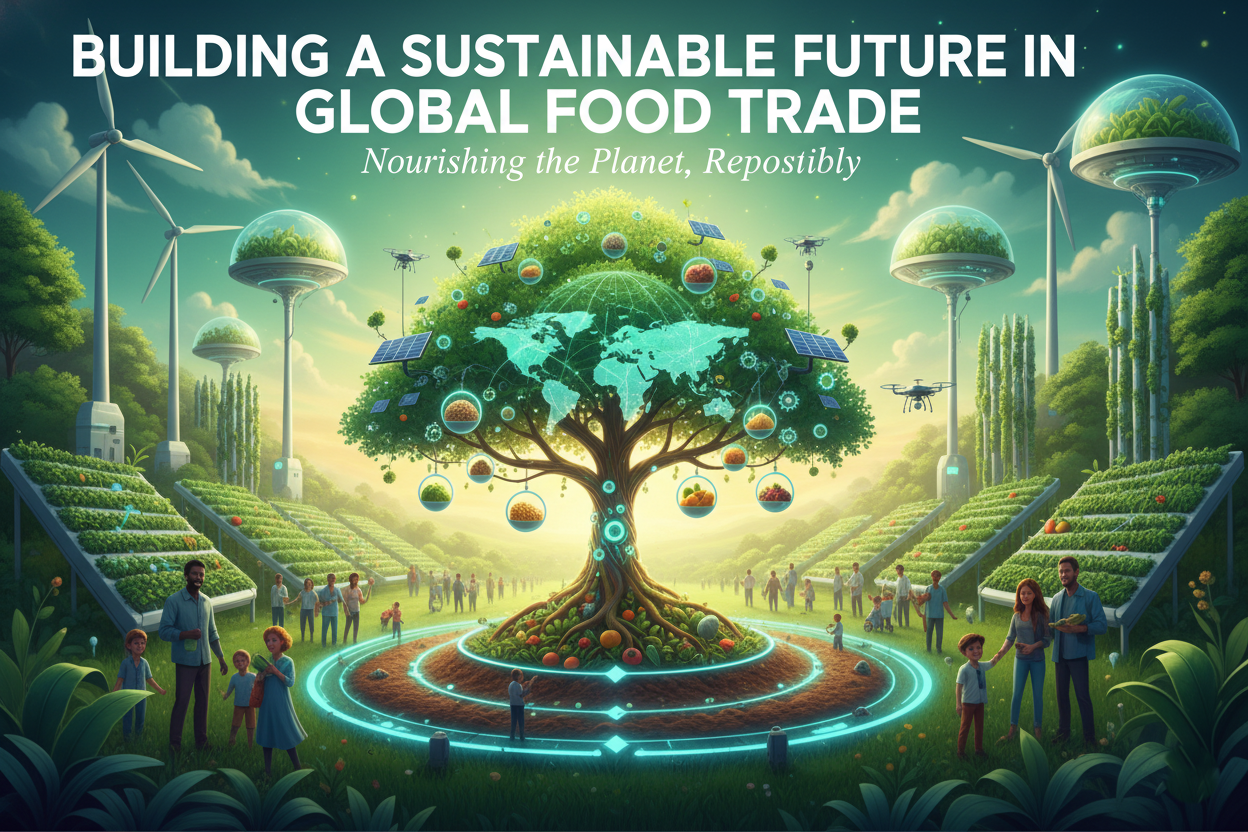
As global food demand continues to rise, adopting sustainable practices in international food trade has become essential. Environmentally conscious strategies not only protect natural resources but also ensure long-term food security, economic resilience, and reduced carbon footprints across the supply chain.
1. Ethical Sourcing & Responsible Trade
- Collaborate with local farmers and producers who follow ethical, environmentally friendly methods
- Prioritize Fair Trade Certified products to support fair wages, safe working conditions, and community development
- Promote biodiversity and regenerative farming techniques to maintain soil fertility and ecosystem balance
2. Eco-Conscious Packaging & Waste Minimization
- Use biodegradable, recyclable, and compostable packaging materials
- Avoid unnecessary plastic by choosing simpler, low-waste packaging designs
- Explore reusable packaging options such as returnable crates, refill systems, and glass containers
3. Energy-Efficient Processing & Transportation
- Incorporate renewable energy sources in manufacturing and processing units
- Optimize cold chain operations to reduce spoilage and energy consumption
- Shorten transportation routes and create regional distribution hubs to minimize greenhouse gas emissions
4. Minimizing Food Waste Across the Supply Chain
- Use advanced inventory tools and AI-driven forecasting to prevent overproduction
- Redirect surplus food to charities, community kitchens, and food banks
- Transform unavoidable waste into compost, animal feed, or bioenergy to reduce landfill impact
5. Certifications & Global Compliance for Sustainable Trade
- Acquire certifications such as Rainforest Alliance, Organic, and MSC to demonstrate sustainable sourcing
- Follow international environmental and food safety regulations to ensure responsible trading practices
- Educate supply chain partners on ethical sourcing and sustainable production methods
Conclusion
Sustainability is no longer optional in the global food trade—it is vital for long-term success. By embracing ethical sourcing, green packaging, energy-efficient logistics, waste management, and international compliance, businesses can drive growth while safeguarding the planet for future generations.